
When we talk about the next generation of young, beginning and small (YBS) producers, we usually focus on what is working against them: high land prices, thin margins and limited capital. Those challenges are real. But another side of the equation deserves equal attention: what happens when a senior producer has built a successful farm or ranch with no identified successor and no transition plan.
A Montana-based Farm Credit relationship manager described a nearby stretch of farmland dotted with for-sale signs.
“We know every one of those producers, and none have an exit strategy. Most are 80 years old or older. We see it all too often. The land goes up for sale quickly, and the buyers often are not farmers,” she said. “That is how promising on-ramps for YBS producers quietly disappear.”
At AgWest Farm Credit, we are likely to see stronger outcomes when producers plan earlier and think in stages. Pairing specialized financing through AgVision, AgWest’s program for YBS producers, with business planning resources through the Business Management Center helps turn good intentions into workable roadmaps. This is a different audience than traditional family succession planning. These are producers without a next generation in mind, who are often looking for alternatives beyond selling to the highest bidder.
Finding the right fit, then building equity over time
Whitney Tatafu, an AgWest relationship manager in eastern Montana, has spent years working with young, beginning and small producers and has seen a wide range of succession outcomes. She often notes that the strongest transitions come when producers are clear about their values, take time to plan, and stay engaged in their communities. The story of Dick, Darlene, Chad and Jackie reflects that approach.
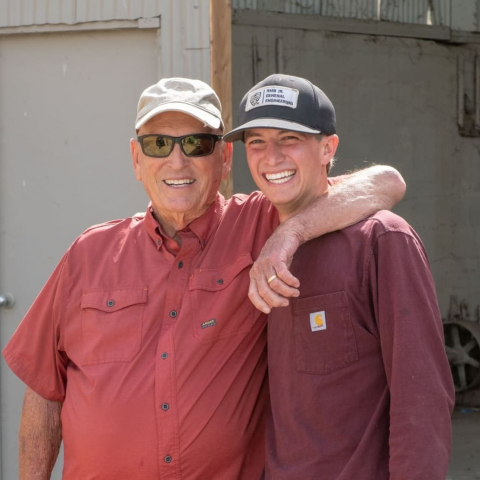
Retiring farmers Dick and Darlene grow canola, peas, wheat and pulse crops in northeast Montana. Without children to take over the operation, they were intentional about the kind of next-generation producer they hoped to find.
Dick and Darlene knew Chad through his work at a local chemical company and respected his strong work ethic. It was important to Dick that any successor also bring a college education, along with a long-term commitment to agriculture and a partner who shared that vision. Chad’s wife, Jackie, plays an active role in daily operations and has been a key part of making the partnership work.
After building that foundation of trust, Dick approached Chad and Jackie and shared both the opportunity and the values behind it. Recognizing that the financial strength and experience remained with Dick and Darlene, they took a measured approach and formed an LLC together to reduce risk while gradually increasing Chad and Jackie’s responsibility over time.
Rather than asking Chad and Jackie to purchase land, equipment and operating assets all at once, the group structured a staged transition. Chad began by purchasing equipment through the AgVision program while leasing the ground at fair market value, creating a manageable path forward.
A shared business plan outlined goals, roles and timing, supported by consistent communication. In some ways, not being family helped reduce the emotional complexity often seen in traditional transitions.
Now in their fourteenth year working together, Chad and Jackie have built a strong foundation and a clear future in agriculture. At the same time, Dick and Darlene have peace of mind knowing their farm will continue and that they are being fairly compensated as they move into retirement. Looking back, all agree that taking a thoughtful, phased approach was the right decision.
Separating land from the business to make it work
Transition strategies like these are not limited to rural areas or large operations.
“At AgWest, we work with a tremendous variety of producers, and meeting their unique needs is what makes this work meaningful,” says Jesika Harper, VP of AgVision.
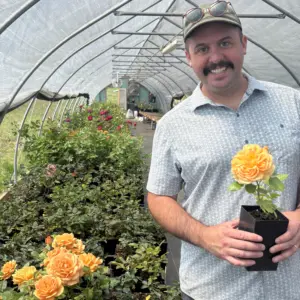
Andrew Smith of Northland Rosarium Mail Order in Washington wanted to purchase his retiring mentor’s specialty mail-order rose business after several years of working alongside her. She was on a short timeline to sell, and acreage for the necessary infrastructure near Spokane was too expensive for Andrew to purchase at the same time.
“We asked him to separate and prioritize needs,” Harper said.
The approach was to purchase the business first, lease space for the high tunnel and propagation house, and then pursue land ownership later. Andrew ultimately secured a lease on unused space from a friend and utilized a Farm Service Agency (FSA) microloan to purchase the business. Stable cash flow and measured growth have since positioned him well for the next phase of land ownership.
“I had to learn along the way,” Andrew said. “Having mentors willing to share their experience, and being open to ideas like leasing before buying, made all the difference. Farming comes with constant challenges, but if you love the work, you keep learning, adjusting and moving forward.”
When conservation becomes part of the solution
For many, the ultimate win-win involves taking a long-view approach to farming legacy. Beginning farmer Ana Galvis and her family needed a place to live and farm close to urban markets, where produce demand is strong, but land and housing costs are major barriers.
“Once farmland is converted to housing, it is not coming back, and frequently these tracts are some of the most productive ground in their state,” Harper said. “Land trusts can provide valuable opportunities for keeping land in agriculture, with many increasingly focused on supporting YBS producers.”
That was the case with the historically significant Kawamoto Farm. The 147-acre property was initially listed near $1 million. After a conservation easement removed some of the development rights, the property appraised at nearly half that value, making ownership feasible for Ana and her family. Conservation easements are intended to be permanent and not right for every situation, but they can be powerful tools for aligning land affordability with long-term agricultural viability.
No one size fits all, and that is the point
Programs for YBS producers matter, but none fit every situation. Tools such as FSA’s Transition Incentives Program, farm incubators like Viva Farms, lease-to-own structures, conservation easements, and FSA joint financing serve different land types, timelines and business goals.
Leasing in particular deserves a more honest conversation.
“Some beginning producers learn quickly that full-time farming is not the right fit,” Harper said. “Leasing may prevent a talented person from being buried under early debt while they are still learning.”
Opening the door to YBS success
If we want more YBS success stories, we cannot rely on one-size-fits-all approaches. We must also support the exiting generation in shaping legacies that keep land working and open doors for someone new.
Whether you are nearing retirement without a successor or a YBS producer searching for a path into agriculture, start the conversation now. Talk with your local Farm Credit lender, your FSA office, or a trusted advisor about staged transitions, lease options, conservation tools, and business planning resources. The best transitions happen while time is still on your side.
This blog post was written by AgWest Farm Credit.
